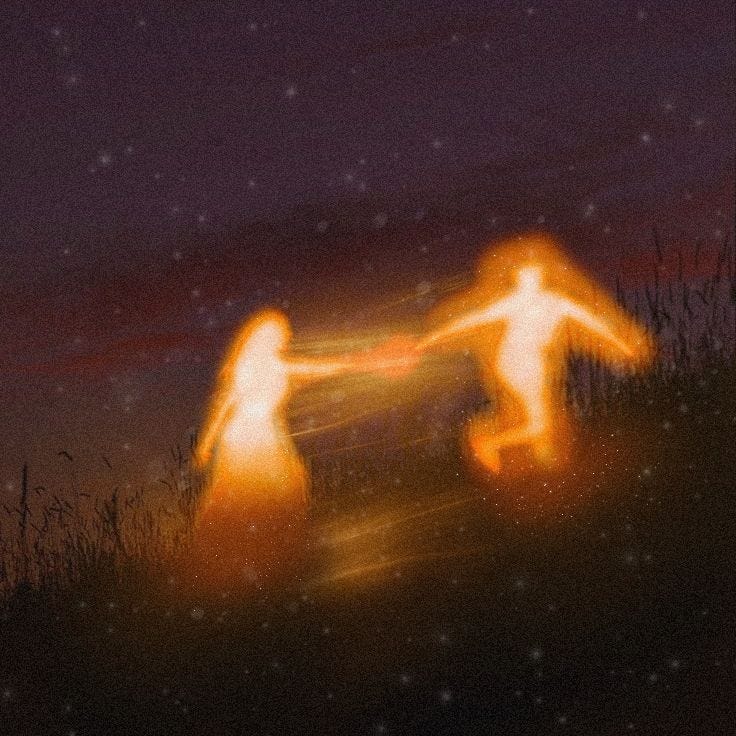
wounded little gods is a story about regina, the protagonist, and her efforts to unravel a mystery brought upon by the disappearance of her new coworker, diana (doreen). she travels back to her hometown, heridos, uncovering truths about the small town little by little.
it is a wonderful, short read that i finished in one day. i was particularly intrigued by the way the story weaves together the age-old polytheistic philippines with the contemporary version. this idea that gods have always existed and continue to exist, walking among us, living in the shadows. the plot moves in such a way that i felt compelled to read it all in one go, to pick at the seams of the mystery alongside regina, forming my own theories from an outsider’s point of view.
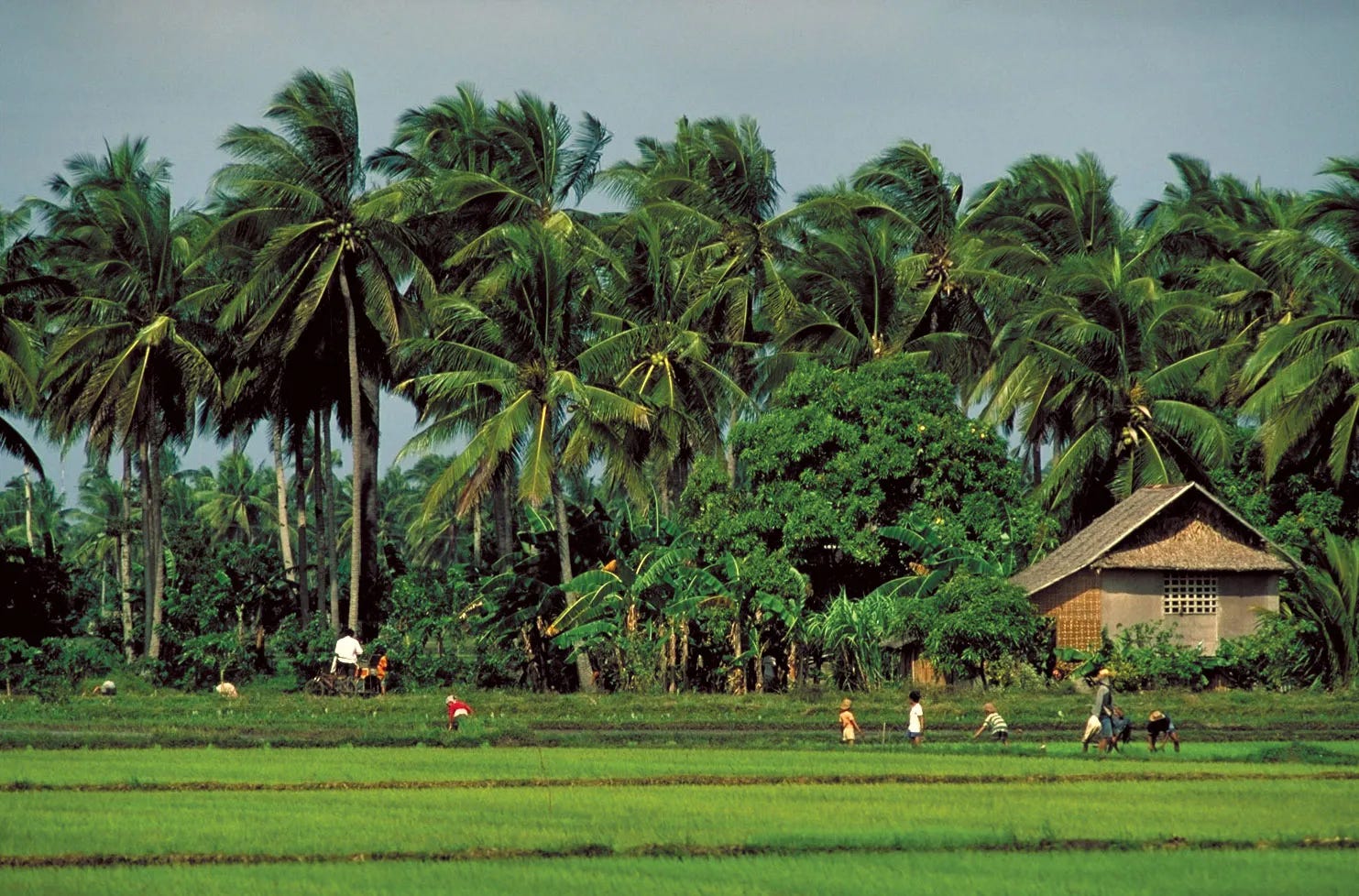
it begins, as all great mysteries often do, with a question (to us, to regina). we are introduced to the town of heridos; to a heridos where spirits and gods and sacrifices exist, until it didn’t. but, the story isn’t really about heridos at all. (i wish it kind of was, just a little bit more). the story is about regina. regina and her curiosity towards her new coworker, diana, particularly after she goes missing and leaves regina with a cryptic note (a map of her hometown, heridos). diana is introduced to us as a stranger, who we quickly realize has even stranger tendencies. on their first proper interaction, diana begins to discuss eugenics and human experimentation—her passion towards it, or rather disbelief, about how such acts can be done by the hands of humans (gods? humans playing gods? humans who view themselves as gods, with such power to give and take lives?). with that, we get a glimpse into what this story could possibly be about. and when regina discovers the truth about her town, about the forgotten center (the maximillian fortes center for heredity and genetics) built on the cajucom property, we the readers gain another piece to the puzzle.
to clarify, or a brief spoiler alert? if you care about that: the center was built and advertised as a solution to the “troubled children” of the town, to alleviate exhausted parents looking for anything, anything to fix their unsavory problem. children given up by their parents who could not find it within themselves to figure out how to deal with their “troubled” child. their “troubled” child who was different from the rest of their peers, who couldn’t learn the same way, who processed information differently, who loved differently, whose troubles manifested into undesirable consequences. (children who were really just children, who needed compassion and support to navigate a world that was not built for them. a world that was unkind to those who didn’t fit into a certain “box”).
there is something to be said about the parents in all of this. while some can understand, and even empathize with the parents’ struggles, others will judge their actions with disdain. how could a parent just give away their children to strangers? to drop them off at this strange center of “science” that just appeared in their quiet, rotting town, that no one really knows anything about; to sign papers they could decipher even less about. are parents supposed to be martyrs for their children, sacrificing themselves in their efforts to love their child unconditionally? or do they rip their hands from the cross, flesh torn, grasping at their creation with flailing arms, desperate, longing for some relief, and beat down nails through their small hands instead? aren’t parents their own child’s form of God? what happens when your own God betrays you, abandons you?
the last couple chapters of the story are really where i think this book shines. it’s satisfying to indulge in the answers to questions that have been steadily and increasingly bubbling throughout the previous chapters. but even more, it pulls the curtain back into the true meaning, the true purpose of this story.
that is to say, this story is really about regina and her brother, luciano. it is about family, and what it means to be human.
luciano, as we find out in the whirlwind of the second act, was never really regina’s brother. regina’s true brother never made it out of the maximillian fortes center: he succumbed to the same fate as the rest of the “troubled” children.
spirits, selfish little spirits, of whom share the land with the humans; of whom were given the privilege to be human for three days out of the year by dumangan (the god of good harvest) rather than the spirits of dew and seedlings, of soils and clouds and rain. little things, inconsequential things: hamog, sibol, lupa, ulap, hangin. three days out of the year, dumangan would give them human bodies with which to experience the world, providing them a perspective “necessary for them to learn”. this would later prove to be his downfall (to underestimate, to have faith in humans capable of doing ungodly, unsightly things). the spirits, still in their human bodies, hatch a plan to kill dumangan in his human form (“if you feel this is important, then I implore you not to assume a mortal body the same moment that they do. Do not make yourself as vulnerable as they are”), and when they are successful, they divide his power between themselves, and make an offering to hukluban, the goddesses of death, in exchange for her mercy (silence). an offering of 30 souls (children, already dead) whose potential was stolen from them; and their potential transferred to the little spirits who now possessed godly powers. they concealed the center, the memories associated with it, and faded into the background, as gods do. this is where their story starts and ends.
(to be human is such an ill-fated experience. to experience this life as a human is such a terrible, terrible thing. the spirits were just too human. they longed to feel the world, the ache unbearable. and when they started questioning their (mere) existence, to be envious, they became damned souls. they didn’t want to be inconsequential. they longed for more. and their creator? their God? was little more than some unwilling being who was too selfish, too superior, too far out of reach, too unwilling to answer questions. and so the spirits became… (gods? humans playing gods? humans who view themselves as gods, with such power to give and take lives?))
it is that little spirit that becomes regina’s older brother, luciano. so, when i say this story is so tightly woven with family. with being human and belonging to a family, it kind of sort of is. love is not as unconditional as it’s made out to be. otherwise, those families would have never given up their children.
but, dumangan offered his whole being to those spirits. forgave them with his dying breath, choking on the blood of what it means to be human. because he understood; he understood what that longing can do to your soul and he understood what it meant to be frustrated and confused. and he cared for them through it all.
but, regina, whose reality is messily shattered in one night, shards of it lodged in her throat, whose real brother is still alive only in flesh, forgives. forgives because that’s what it also means to be human. she forgives this spirit, whose soul is the only one she truly knows, hidden in the facade of her real brother. but he’s all she’s ever known: that’s her brother.